Plopping curly hair is the towel trick that cuts dry time and eliminates frizz. For healthy hair basics, see the AAD’s hair care tips.
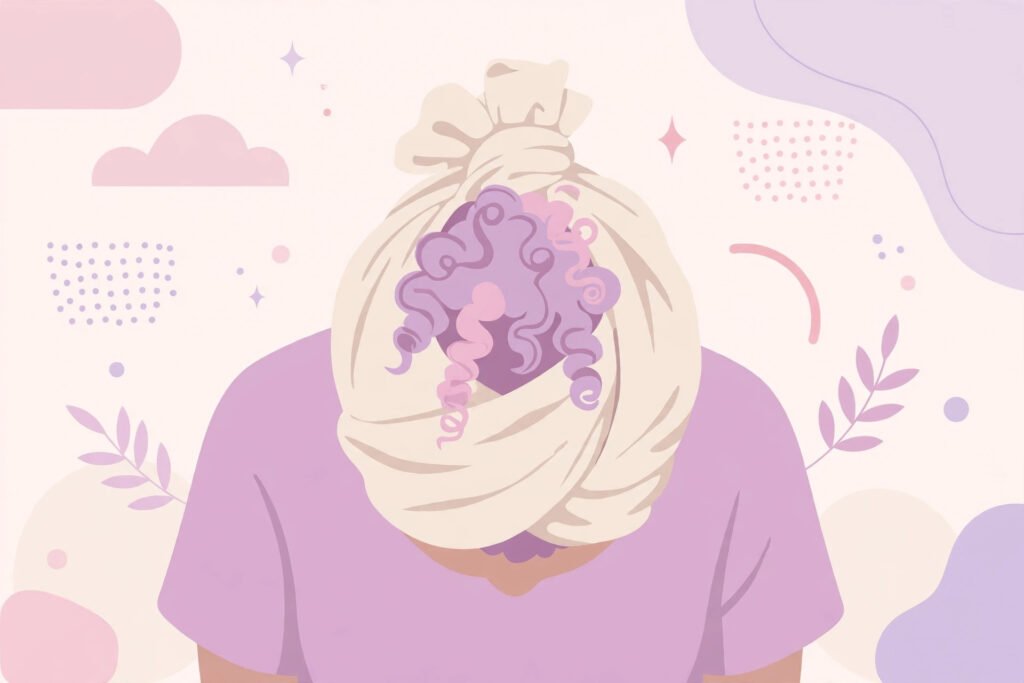
Table of Contents
Plopping Curly Hair: What Is It and Why Does It Work?
Plopping is a drying technique where you wrap soaking wet styled hair in a microfibre towel or old cotton T-shirt and leave it for 15-30 minutes before air drying or diffusing. It removes excess water without disturbing curl clumps, whereas a regular towel creates friction that separates strands and causes frizz. The result is faster dry time and dramatically better definition. Compare diffusing vs air drying for what to do after you release your hair.
How to Plop Curly Hair Correctly
Lay your microfibre towel flat on a surface. Bend forward, flip your hair down, and lower your hair ends onto the centre of the towel. Bring the far end up to your neck, then wrap the sides around and secure at the top of your head. The hair should be scrunched up inside in a natural pile — not stretched or flattened. Leave for 15-20 minutes before releasing and diffusing.
The Fabric Matters
Regular terry cloth towels have a looped surface that grabs individual hair strands and creates friction. This is exactly what causes frizz. Microfibre towels have a flat, ultra-fine surface that absorbs water without friction. An old cotton T-shirt works almost as well and costs nothing if you have one handy. For plopping curly hair the smoothest results, a cotton t-shirt is usually enough — microfibre towels absorb faster, so switch if your hair stays damp past twenty minutes.
Master plopping curly hair and finish with our complete curly hair routine for beginners for a full wash day routine.
Pro Tips for Plopping Curly Hair
1. Plop on soaking-wet hair, not damp. Plopping works by letting the fabric absorb water while your curls set in their natural clump pattern. If your hair is already half-dry, the clumps have set and plopping does very little. Apply your products, then plop immediately.
2. Use a smooth cotton t-shirt or microfiber towel — never terry cloth. Terry loops grab individual strands and create the friction and frizz you are trying to eliminate. A large, soft cotton t-shirt is the classic tool and costs nothing if you have one handy.
3. Do not plop too long. Fifteen to twenty minutes is the sweet spot for most curl types. Longer than thirty minutes can flatten your roots and leave odd dents in the curl pattern. Set a timer the first few times until you find your ideal window.
4. Apply stylers before plopping, not after. The wrap presses products into your curls and helps them form. Plopping bare hair and then adding gel misses the whole point — the product needs to be in there while the clumps set. Your wash day routine sets the stage; plopping finishes the drying step.
5. Flip your head upside down to plop. This encourages root lift and volume instead of flat, pressed-down roots. Pile your curls onto the crown of your head, then wrap — gravity does the volumizing work for you.
6. Pair plopping with the right follow-up. Plopping is a drying step, not a full routine. After you unwrap, either air dry or diffuse to finish. See our complete curly hair routine for beginners to put the whole wash day together. Anyone learning plopping curly hair as part of a new routine should master this step early — it is the easiest way to reduce frizz without extra products.
Common Mistakes to Avoid
Plopping with a regular bath towel. Terry cloth creates exactly the frizz you are trying to eliminate. Fix: switch to a cotton t-shirt or microfiber towel with a smooth surface.
Plopping for hours. Marathon plopping flattens roots, creates dents, and can leave hair smelling musty. Fix: keep it to 15–20 minutes, then release and finish drying.
Plopping dry or product-free hair. Without water and stylers, there is nothing for the fabric to set. Fix: apply leave-in and styler first, then plop while hair is still soaking wet.
Wrapping too tight. Excess tension stretches curls and causes frizz at the roots. Fix: snug but comfortable — the wrap should hold your hair in place, not squeeze it.
Frequently Asked Questions
Does plopping work for all curl types? It works best for wavy to curly hair (2A–3C). Very tight coils often get better results from banding or diffusing, since plopping can compress shrinkage unevenly. Fine hair should plop for less time to avoid flat roots.
Can I plop overnight? Not recommended. Sleeping in a plop keeps hair damp for hours, which can cause hygral fatigue, flattened roots, scalp irritation, and even a mildew smell in the fabric. Stick to 15–20 minutes.
What is the difference between plopping and micro-plopping? Micro-plopping means scrunching your curls with the t-shirt or microfiber towel instead of wrapping them up. It is faster, adds volume, and works well if you dislike the wrapped feeling or are short on time.
Why is my hair frizzy after plopping? Usually one of three causes: the wrong fabric, plopping too long, or not enough product. Use a smooth cotton t-shirt, keep it under 20 minutes, and make sure you applied enough leave-in and styler before wrapping. Can beginners use the plopping curly hair method with any towel? Yes, but fabric matters more than technique. A cotton t-shirt works for nearly everyone, while terry cloth undermines the plopping curly hair method by creating the very frizz you are trying to avoid.
Pingback: 5-Step Curly Hair Routine for Beginners: Complete Guide
Pingback: Your Perfect Curly Hair Wash Day Routine: 7 Proven Steps
Pingback: Best Microfiber Towel for Curly Hair in 2026: 7 Picks for Frizz-Free Drying
Pingback: Best Wide Tooth Comb for Curly Hair in 2026: 7 Picks That Won't Snap Curls
Pingback: Shingling Method for Curly Hair (2026)