You spend an hour on wash day getting your curls perfectly defined — then one night of sleep flattens them into a frizzy triangle. Sound familiar? The pineapple method for curly hair is the simplest fix in the curl world: a loose, high ponytail worn overnight that keeps your curls off the pillow and preserves their shape while you sleep. In this guide, we break down exactly how to do the pineapple method for curly hair step by step, how to adapt it for your curl type and hair length, and the mistakes that undo all your good work.
Our approach: We have not run a lab test on sleeping hairstyles, so nothing here is dressed up as hands-on testing. Instead, we researched the pineapple method for curly hair the honest way — comparing technique guides from curl specialists, dermatologist-backed hair-care principles, and what real curly routines report working night after night. Everything below is research-based and independently written.
Table of Contents
What Is the Pineapple Method?
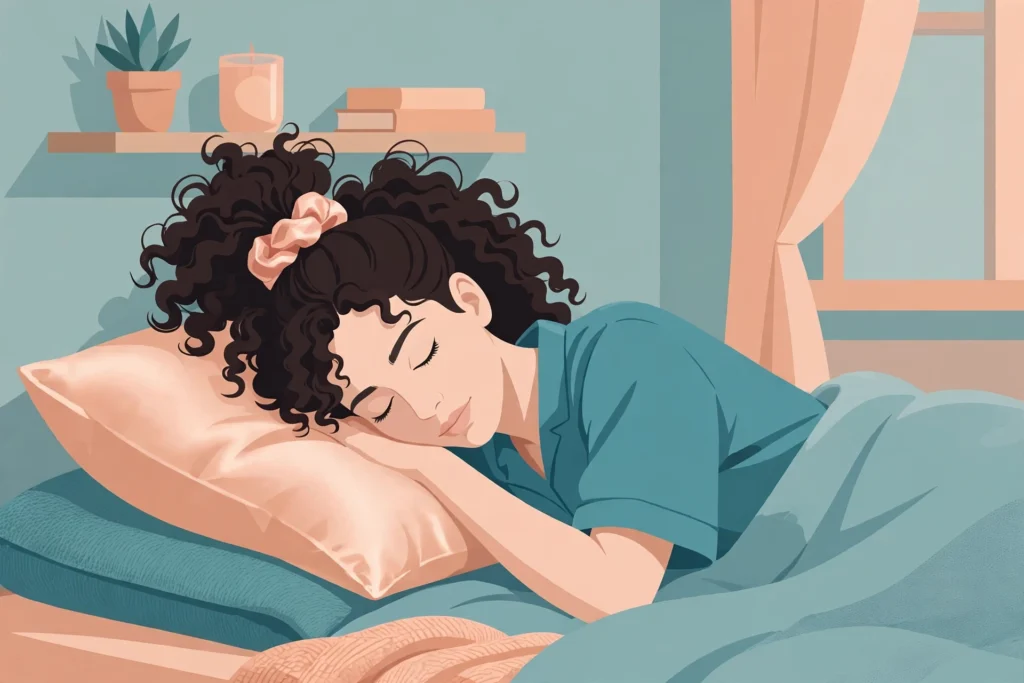
The pineapple method for curly hair is an overnight protective style with a silly name and a serious job. You gather your dry curls loosely into a very high, very loose ponytail on top of your head — right around the crown — and secure it with a soft, stretchy scrunchie or satin tie. From above, your hair fans out like the spiky leaves on top of a pineapple. That is the entire joke behind the name, and also the entire mechanism: with your curls piled on top of your head, they spend the night untouched by the pillow instead of crushed beneath your head.
The technique became popular in the curly hair community because it solves the two biggest overnight enemies of defined curls: friction and compression. Friction from a cotton pillowcase roughs up the cuticle and creates frizz; compression from the weight of your own head flattens curls at the roots and stretches out the pattern. The pineapple method for curly hair lifts the curls out of the crush zone entirely, so they survive the night much closer to how they looked when you went to bed.
Why the Pineapple Method Works
Curly hair loses definition overnight mainly because of mechanical stress, not magic. Every toss and turn grinds your hair against the pillowcase, and that friction lifts the cuticle layer of each strand. A lifted cuticle scatters light (hello, frizz) and lets moisture escape, which is why day-two hair often looks duller and puffier than day-one hair. Keeping the hair gathered above the head removes most of that grinding contact.
The height of the ponytail matters too. A ponytail at the nape still leaves the ends rubbing the pillow, and a mid-height ponytail puts a dent in the curl pattern wherever the tie sits. The pineapple method for curly hair puts the tie point at the crown, so the curls cascade forward over the forehead rather than splaying sideways under your cheek. The result: less flattening at the roots, fewer stretched-out clumps, and curls that need only a quick morning refresh instead of a full re-style. Our guide to how to refresh curly hair on day 2 covers what to do with those preserved curls when you wake up.
How to Do the Pineapple Method: Step by Step
The pineapple method for curly hair takes about thirty seconds once you know the sequence. Do it on dry or fully styled hair right before bed:
- Flip your head upside down. Bend forward so all of your hair falls toward the floor. This uses gravity to gather everything to one point at the crown and keeps the roots from getting stretched flat.
- Gather loosely at the crown. Using your fingers — not a brush — collect all your hair into one handful at the very top of your head. Keep it loose; you are not making a gym ponytail. The roots should feel comfortable, not pulled tight.
- Secure with a soft tie. Wrap a satin or silk scrunchie (or a loose fabric-covered elastic) around the base just once or twice — enough to hold, not enough to dent. A tight elastic will crease your curl pattern right where you do not want it.
- Let the ends fan out. Do not pull the hair all the way through the tie on the last wrap if you prefer a loose loop; leaving the ends fanned out over your forehead mimics the “pineapple leaves” shape and keeps the ends off the pillow.
- Add a second layer of protection. For maximum results, layer the pineapple method for curly hair with a satin or silk bonnet over the pineapple, or sleep on a satin pillowcase. Our breakdown of the satin bonnet vs silk pillowcase debate can help you choose which pairing suits your routine.
Pineapple Method Variations for Your Curl Type
The basic pineapple method for curly hair works for most curl patterns, but the details change with length, density, and curl tightness. Pick the variation that fits your hair:
For Loose Waves and Curls (2A–3A)
Looser patterns stretch out easily, so the priority is minimal tension. Use the loosest tie you own — a satin scrunchie wrapped once is often enough — and pineapple higher than you think you need to, almost at the hairline. The pineapple method for curly hair in this range is more about keeping the waves off the pillow than about a tight gather, so err on the side of gentle.
For Tight Curls and Coils (3B–4C)
Tighter curls hold their shape better overnight but are more prone to shrinkage-driven tangling. Pineapple as usual, then wrap the pineapple itself loosely in a satin scarf or bonnet so the coils cannot knot against each other while you sleep. If your hair shrinks significantly, do the pineapple method for curly hair on stretched or banded hair (hair dried in loose sections) rather than fully shrunken hair, so the morning reveal keeps its length.
For Short Hair
Hair that is too short to gather into one ponytail can still use a modified pineapple method for curly hair: split the hair into two or three small, loose top knots or mini pineapples instead of one. Secure each with a tiny satin scrunchie. The principle is identical — keep the curls up and off the pillow — just distributed across a few sections.
The Multi-Pineapple for Thick, Dense Hair
Very thick or very long hair in a single pineapple can be heavy enough to pull at the roots and ache by morning. The fix is two or three pineapples: one at the crown and one or two slightly behind it, each loosely secured. This distributes the weight, keeps every section off the pillow, and avoids the root-pulling that makes people abandon the pineapple method for curly hair after one uncomfortable night.
What to Use (and What to Avoid)
The right tools make the pineapple method for curly hair effortless, and the wrong ones undo it:
- Use satin or silk scrunchies: smooth surfaces let the tie slide out without snagging, and they do not absorb moisture the way cotton elastics do.
- Use a satin bonnet or pillowcase as backup: even a perfect pineapple shifts during sleep; a slippery surface underneath means less damage when it does.
- Avoid tight elastic bands: thin, rubbery elastics crease curls and snap strands. If you wake up with a visible dent line, your tie is too tight.
- Avoid metal or plastic clasps: claw clips and metal-jointed ties catch and break curls when you toss at night.
- Avoid pineappling wet hair: the pineapple method for curly hair is a dry-hair technique. Sleeping with wet, gathered hair stretches the pattern unevenly and can leave the roots damp until morning.
Pro Tips
- Pineapple on refresh day, not just wash day: the technique works any night your curls still have definition worth saving. Many routines pineapple every night between washes and only fully refresh every second or third morning.
- Loosen the roots in the morning: after removing the scrunchie, flip your head upside down and gently shake at the roots with your fingertips to break up any flatness at the crown. The pineapple method for curly hair preserves the lengths; thirty seconds of root-fluffing restores the volume.
- Pair with plopping for a full system: plopping sets the curl pattern at wash time, and the pineapple method for curly hair preserves it at night. If you have not tried it, our plopping 101 guide walks through the towel technique step by step.
- Keep a spray bottle on the nightstand: a light mist of water in the morning reactivates the products already in your hair, so preserved curls spring back without adding more product.
- Protect the hairline: if the tie sits too close to your forehead it can flatten your edges. Position the pineapple at the true crown — roughly where a high bun would sit — and keep baby hairs out of the tie.
- Follow dermatologist-backed basics: gentle handling and avoiding tight hairstyles protect fragile hair from breakage — the same principles in the American Academy of Dermatology’s healthy hair tips.
Common Mistakes to Avoid
- Pulling it too tight. The number-one reason the pineapple method for curly hair “does not work” is a death-grip ponytail. Tight roots mean stretched roots, dent lines, and tension headaches. If your scalp feels pulled, it is too tight — full stop.
- Pineappling soaking wet hair. Wet curls gathered high stretch under their own weight and dry into a stretched, uneven pattern. Always pineapple dry or fully diffused hair.
- Using a regular cotton scrunchie or elastic. Cotton absorbs moisture from your hair and creates friction at the tie point. Satin or silk is the upgrade that costs almost nothing and changes everything.
- Skipping the bonnet or pillowcase. A pineapple alone is good; a pineapple plus a slippery sleep surface is dramatically better. The two work as a system, not as substitutes.
- Expecting miracles on day 4 or 5. The pineapple method for curly hair preserves definition — it does not create it. By the fourth or fifth day, even preserved curls need a real refresh or a wash; that is normal, not a technique failure.
Frequently Asked Questions
Does the pineapple method for curly hair work for all curl types?
Yes, with adjustments. Looser waves need the gentlest, loosest version; tighter coils benefit from pairing it with a bonnet or scarf; short hair uses multiple mini pineapples. The core principle — keep curls gathered up and off the pillow — works across the 2A to 4C spectrum.
Can I pineapple my hair every night?
Yes. The pineapple method for curly hair is designed for nightly use between wash days. Because it is loose and uses a soft tie, it does not create the tension damage that tight nightly styles can. Just make sure the tie is genuinely loose and satin or silk.
Why do my curls still look flat in the morning after pineappling?
Usually one of three things: the pineapple was too tight (stretching the roots), the tie sat too low (compressing the crown), or the hair was not fully dry when you pineapled. Fix the placement and tension first — and flip your head upside down and fluff the roots for thirty seconds before judging the result.
Can I use the pineapple method for curly hair with short hair?
Absolutely. Hair too short for a single ponytail goes into two or three small loose top knots with mini satin scrunchies. Each section stays off the pillow, which is the whole point of the technique.
Should I pineapple wet or dry hair?
Dry, always. The pineapple method for curly hair is an overnight preservation technique for styled, dry curls. Gathering wet hair stretches the pattern unevenly and traps moisture at the roots, which can lead to damp roots and stretched-out definition by morning.
The Bottom Line
The pineapple method for curly hair earns its popularity because it is the rare technique that is genuinely free, takes thirty seconds, and visibly works: gather dry curls loosely at the crown with a satin scrunchie, let them fan out like pineapple leaves, and back it up with a satin bonnet or pillowcase. Adapt it to your curl type — loose for waves, bonneted for coils, multi-pineapple for thick hair — and keep the tension gentle. Wake up, fluff the roots, mist lightly, and your wash-day curls get a second (and third) day of life. To build the rest of your routine around nights like these, our ultimate curly hair care guide ties wash day, styling, and nighttime protection together.
Pingback: Scrunch Out the Crunch: Soften a Gel Cast Without Frizz (2026)
Pingback: Finger Coiling for Curly Hair: Definition That Lasts for Days (2026)