If you have ever styled your curls with gel or mousse, waited patiently for them to dry, and then stared at your stiff, helmet-like hair wondering where you went wrong — relax. Nothing went wrong. You are exactly one step away from soft, defined curls, and that step is to scrunch out the crunch.
Learning how to scrunch out the crunch properly is one of those small skills that changes everything about wash day. Do it right and your curls turn from rigid and crispy to soft, bouncy, and touchable — without losing a bit of definition. Do it wrong (or too early) and you invite frizz. This guide walks you through the whole process: what the “crunch” actually is, when to scrunch, the exact hand technique, the best oils to use, and the mistakes that undo all your work.
Our approach: This guide is research-based. We reviewed styling guidance from board-certified dermatologists, including the American Academy of Dermatology, plus widely shared methods from the curly-hair community, to distill the technique into clear, honest steps. We have not personally tested every product named here — the method works because of how gel casts behave on hair, not because of any brand.
Table of Contents
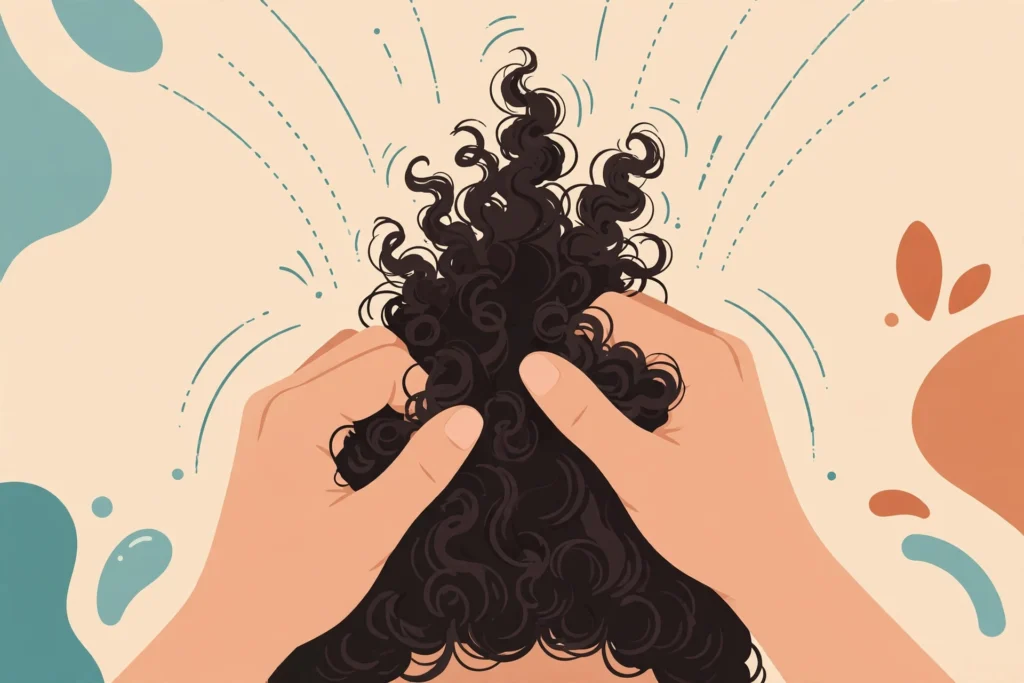
What Does “Scrunch Out the Crunch” Mean?
In curly hair routines, to scrunch out the crunch means to gently break up the hard, crunchy shell — called a “gel cast” — that forms when styling products like gel or mousse dry on your hair. The cast is not a mistake. It is actually a good sign: it means the product locked your curl pattern in place while it dried, protecting every clump from frizz and gravity.
Whether you used a gel, a mousse, or a custard, the principle is the same. As the product dries, it forms a firm film around each curl clump. That film holds the shape while the water evaporates — which is exactly why curls styled with a strong cast often look more defined than curls styled without one. The cast is temporary by design: it is meant to be broken.
Once your hair is fully dry, the cast has done its job. Scrunching — lifting sections of hair upward toward your scalp and gently squeezing — cracks that shell and releases soft, defined curls underneath. The ability to scrunch out the crunch cleanly is the difference between curls that look “producty” all day and curls that look naturally perfect.
When to Scrunch Out the Crunch
Timing is everything. Most people scrunch out the crunch too early, and that is the number one cause of midday frizz. Here is the rule: do not touch the cast until your hair is 100 percent dry — not 90 percent, not “mostly dry.” Even slightly damp spots will frizz the moment you break the cast around them.
How do you know it is fully dry? Squeeze a curl between your fingers. If it feels cool or damp at the roots, wait longer. The roots and the nape of the neck are the last places to dry, so check there. Air-dried hair typically needs several hours; diffused hair is ready much sooner. If you are unsure whether diffusing or air drying suits your routine, our diffusing vs air drying guide breaks down both methods.
How to Scrunch Out the Crunch, Step by Step
Step 1: Confirm your hair is completely dry
Before you scrunch out the crunch, do the squeeze test on the roots, the nape, and a few random curls. Everything should feel room temperature and dry to the touch. If anything feels cool, give it more time — patience here pays off in frizz-free results.
Step 2: Put a drop of light oil on your hands
Rub a pea-sized amount of a lightweight oil — jojoba, grapeseed, or argan — between your palms. The oil does two jobs: it helps your hands glide over the cast without snagging, and it seals in a little extra softness and shine. A tiny amount of oil helps you scrunch out the crunch smoothly instead of dragging through it.
Step 3: Scrunch upward in sections
The actual move to scrunch out the crunch is simple: gather a section of hair in your open palm, lift it up toward your scalp, and gently squeeze — like an accordion. Hold for a second, release, and move to the next section. Work all the way around your head, including the underneath layers, and do not forget the crown, where the cast is often thickest. You will hear and feel the cast crackling as it breaks. That is exactly what you want.
Step 4: Flip, shake, and arrange
Flip your head upside down and give your roots a gentle shake with your fingertips to add volume. Flip back up and arrange your part and any face-framing pieces. Do not rake your fingers through the lengths — that separates clumps and creates frizz. If your curls need overnight protection after styling, the pineapple method keeps them intact while you sleep.
Step 5 (optional): Finish with a cool shot
If a few spots still feel slightly crisp, a quick blast of cool air from your dryer while scrunching finishes the job. Cool air smooths the cuticle without creating frizz the way heat can.
Best Oils for Scrunching Out the Crunch
You do not need a special product to scrunch out the crunch — any light, non-greasy oil works. The goal is slip, not moisture, so a few drops are enough. Good options include:
- Jojoba oil — the closest to your scalp’s natural oils; absorbs quickly and rarely feels heavy. Our best hair oils for curly hair guide compares it with other lightweight picks.
- Grapeseed oil — very light and inexpensive; a good everyday choice for fine curls.
- Argan oil — slightly richer; great for thick or coarse curls that need extra softness.
- A silicone-free serum — if you prefer a product made for finishing, use it the same way: a pea-sized amount, palms together, then scrunch.
Avoid heavy butters or thick oils at this stage — they can weigh down freshly defined curls and undo your volume.
Pro Tips to Scrunch Out the Crunch Without Frizz
- Scrunch with oiled hands only. Dry hands on a dry cast create friction, and friction creates frizz.
- Work in sections, not handfuls. Small sections give you even pressure and a more uniform result.
- Keep the motion vertical. Lift straight up toward the scalp; side-to-side rubbing separates curl clumps.
- Leave the roots for last. Scrunch the mid-lengths and ends first, then lightly fluff the roots for volume.
- Do not over-scrunch. Once the cast is broken and the curls feel soft, stop. Extra handling is how frizz sneaks back in.
- Match your styler to the technique. A flexible-hold gel breaks more softly than a maximum-hold one. If you are still choosing products, our gel vs mousse vs custard comparison explains how each one behaves.
Common Mistakes When You Scrunch Out the Crunch
- Scrunching while damp. The cast has not finished setting, so breaking it early releases undefined, frizzy hair. Wait for 100 percent dry.
- Using bare, dry hands. Always add oil or serum first — it is the difference between smooth release and friction frizz.
- Raking fingers through curls. Scrunching lifts and squeezes; raking separates. They are not the same motion.
- Skipping the underneath layers. The bottom layers hold the most cast. If the top looks soft but the underneath is still crunchy, you missed a section.
- Applying more product after scrunching. Adding gel or cream on top of broken cast usually creates buildup and dullness. If you need a refresh later, lightly mist with water instead.
Frequently Asked Questions
Can I scrunch out the crunch if my hair is only half dry?
No — wait until it is fully dry. Scrunching damp hair breaks the cast before it has locked your curl pattern, which leads to frizz and lost definition. If you are short on time, diffuse on low heat until everything is dry, then scrunch.
Why is my hair still crunchy after scrunching?
You probably used too much product or a very strong-hold gel. Try using less next wash day, or switch to a medium-hold formula. Scrunching again with oiled hands usually softens the remaining stiffness.
Does scrunching out the crunch cause frizz?
Done correctly — on fully dry hair, with oiled hands, using an upward squeezing motion — it should not. Frizz almost always comes from scrunching too early, using dry hands, or raking instead of scrunching.
Can I scrunch out the crunch with mousse instead of gel?
Yes. Mousse forms a lighter cast than gel, so it breaks more easily — sometimes just from sleeping on it. The same technique applies: wait until dry, oil your hands, scrunch upward.
How do I keep my curls defined after scrunching?
Avoid touching your hair during the day, protect it at night with the pineapple method or a satin bonnet, and refresh with a light water mist rather than more product. For a full routine framework, see our ultimate curly hair care guide.
The Bottom Line
Once you know how to scrunch out the crunch, wash day gets a lot less stressful. Wait for fully dry hair, oil your hands, scrunch upward in sections, and stop when the curls feel soft. The cast did its job protecting your pattern — now let your curls enjoy the softness they earned.